
Designing an intuitive B2B analytics engine that translates complex traffic data into understandable visitor intent
What is Verilytic?
Verilytic is a privacy-first web analytics platform that transforms anonymous website traffic into actionable buyer intent. By resolving visitors into verified corporate networks in real time without invasive cookies or banner popups, the platform gives teams instant visibility into who is visiting their site and which pages drive revenue.
What I Aimed to Solve
My goal was to design an intuitive analytics experience free from the setup friction and reporting bloat of traditional tools. I set out to replace overwhelming menus with immediate clarity on site visitors and lead quality, combining a streamlined interface with a conversational search approach that turns plain-English questions into instant insights.
Results
Verilytic provides a fresh alternative to bloated enterprise suites and frustrating basic tools that fail to capture meaningful buyer context. Rather than forcing teams to navigate convoluted menu systems or parse walls of unorganized traffic, the platform strips away reporting bloat to surface verified corporate networks alongside everyday visitor data for actionable buyer intent.
By pairing a natural-language conversational search bar with an intuitive visual hierarchy, the finished platform gives users effortless, instant clarity on their most valuable traffic channels. This streamlined approach eliminates traditional setup friction, allowing organizations to go from raw installation code to uncovering live visitor signals instantly without getting bogged down in complex configurations.
Building a zero-to-one analytics platform for small business needs
As a product designer driven by a genuine passion for web analytics, I grew increasingly frustrated with the bloated, complex options available to non-enterprise teams.
I wanted to use this project as an opportunity to build a product from scratch, leveraging generative AI to rapidly prototype layouts, design system tokens, and functional code. Taking Verilytic from zero to one allowed me to focus purely on what small businesses actually need: an uncluttered, intuitive interface that cuts through data noise and turns raw traffic into immediate clarity.
Legacy analytics tools are built for enterprise reporting teams, leaving small businesses drowning in noise, setup friction, and useless data.
The Problem: Enterprise Complexity for Growing Teams
Traditional analytics platforms like GA4 and Mixpanel are engineered for dedicated data analysts. For small business founders and lean marketing teams, these platforms create massive friction:
- Analytical Bloat: Dashboards are cluttered with complex menus, custom query builders, and vanity metrics that hide actual customer intent.
- Heavy Setup & Maintenance: Setting up conversion goals and company tracking requires technical overhead, tag managers, and continuous upkeep.
- Privacy & Consent Banners: Standard tracking relies on invasive third-party cookies that force cookie consent popups, hurting user experience and degrading site conversion rates.
The Market Opportunity: Instant Intent Without the Overhead
Small businesses do not need deep behavioral data science. They need immediate, actionable answers to simple questions about who is visiting their site, what company they work for, and whether they are ready to buy.
Verilytic bridges this gap by offering a privacy-first B2B analytics engine tailored specifically for growing teams:
- Immediate Company Resolution: Turn anonymous IP traffic into verified corporate networks in real time without invasive cookies or banner popups.
- Zero-Friction Answers: Replace complex query builders with an intuitive UI and natural language search, giving teams immediate buyer intent at a glance.
- Accessible Positioning: Deliver enterprise-grade buyer intent intelligence at a structure and price point designed for non-enterprise budgets.
Four key features that defined the product value & experience
Conversational AI Copilot
I put a single search bar at the centre of the product, so users can ask questions in plain English instead of learning a reporting menu.
Real-Time B2B Identification
Each session resolves to the company or network behind it the moment a visitor lands, turning traffic counts into named accounts.
Cookieless by Design
Verilytic processes data without storing personal tracking files. Designing around that constraint removed the consent banner entirely and kept the product GDPR compliant.
Bot & Scraper Filtering
Automated traffic is filtered out before it reaches a chart, so every number on screen represents a real person.
Identify traffic patterns at a glance
I designed the trend chart to overlay current visitors and pageviews against a past period, so a team can see how this week compares without building a report.
Know who visited, not just how many
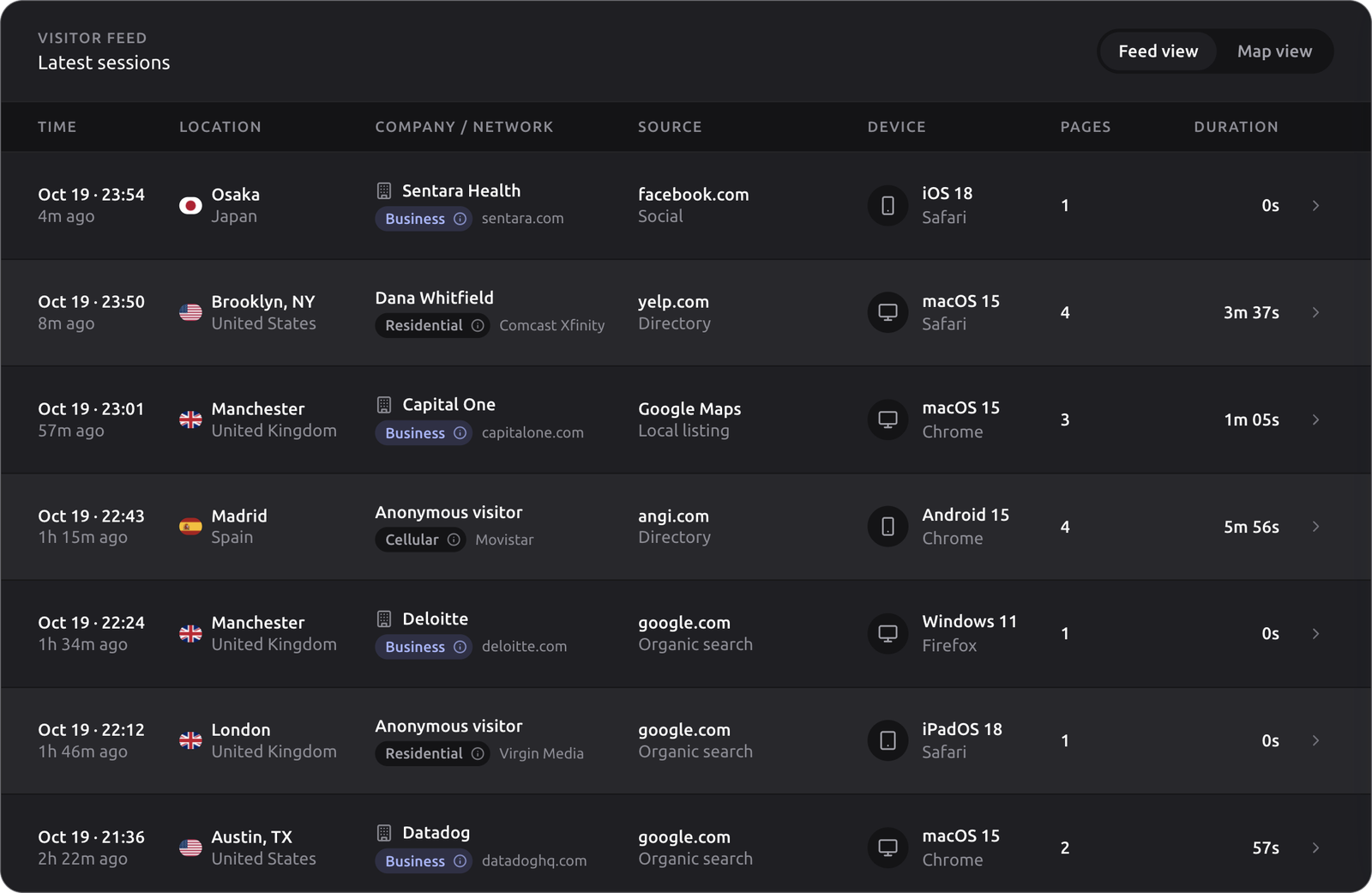
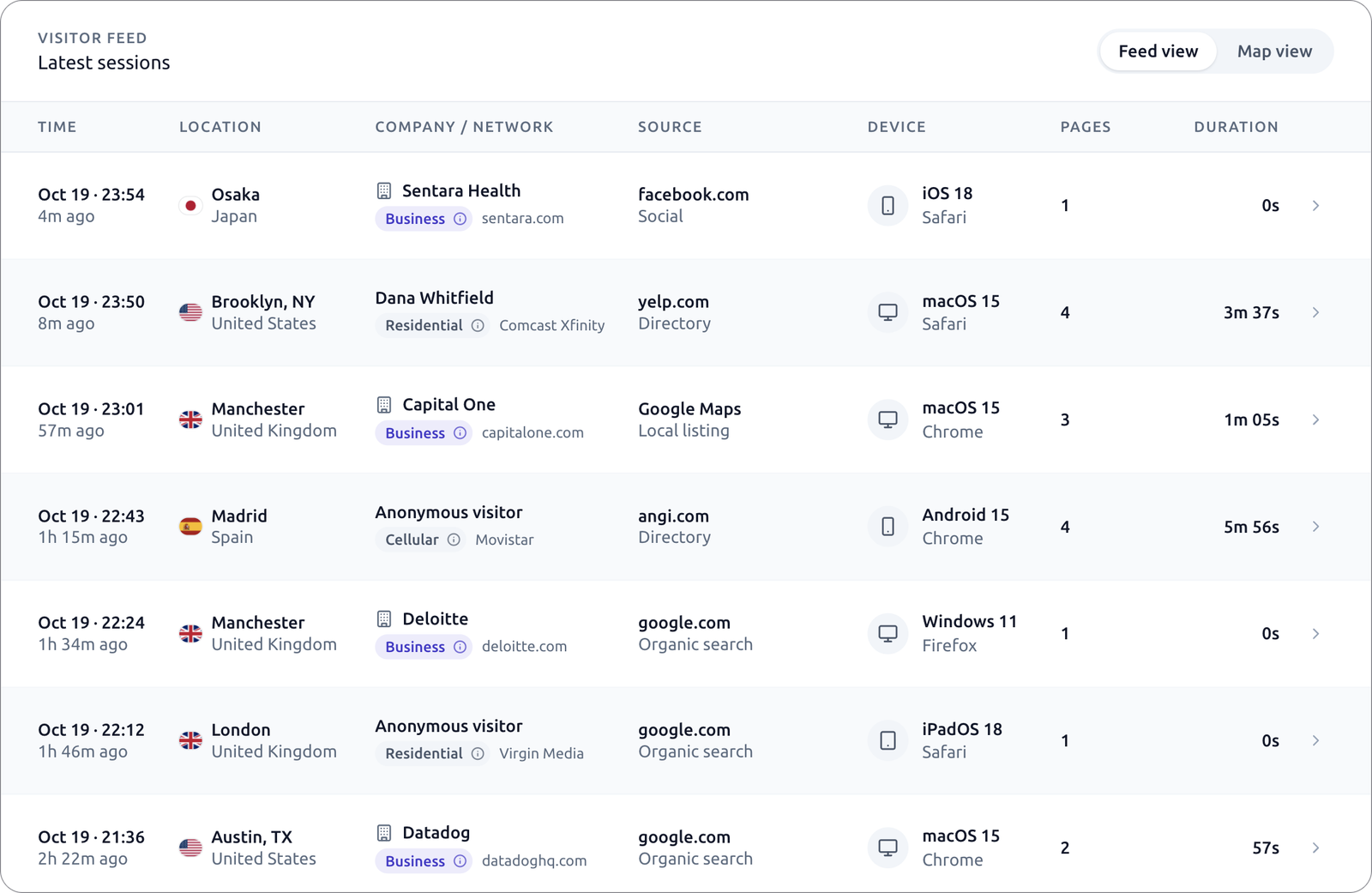
Every session in the feed shows the company or network behind it, where the visitor came from, and how long they stayed. Selecting a row opens the full page-by-page journey, giving sales teams context before they reach out.
See where your visitors are
The map lets users explore traffic from country down to metro level. Clusters stay readable at every zoom, so regional interest from target accounts is visible at a glance.
Plain-English questions, instant answers
The command bar translates natural-language questions into dashboard filters. Suggested prompts show new users what they can ask, and answers return as short summaries with the companies and pages behind them.
Choose the view that suits you
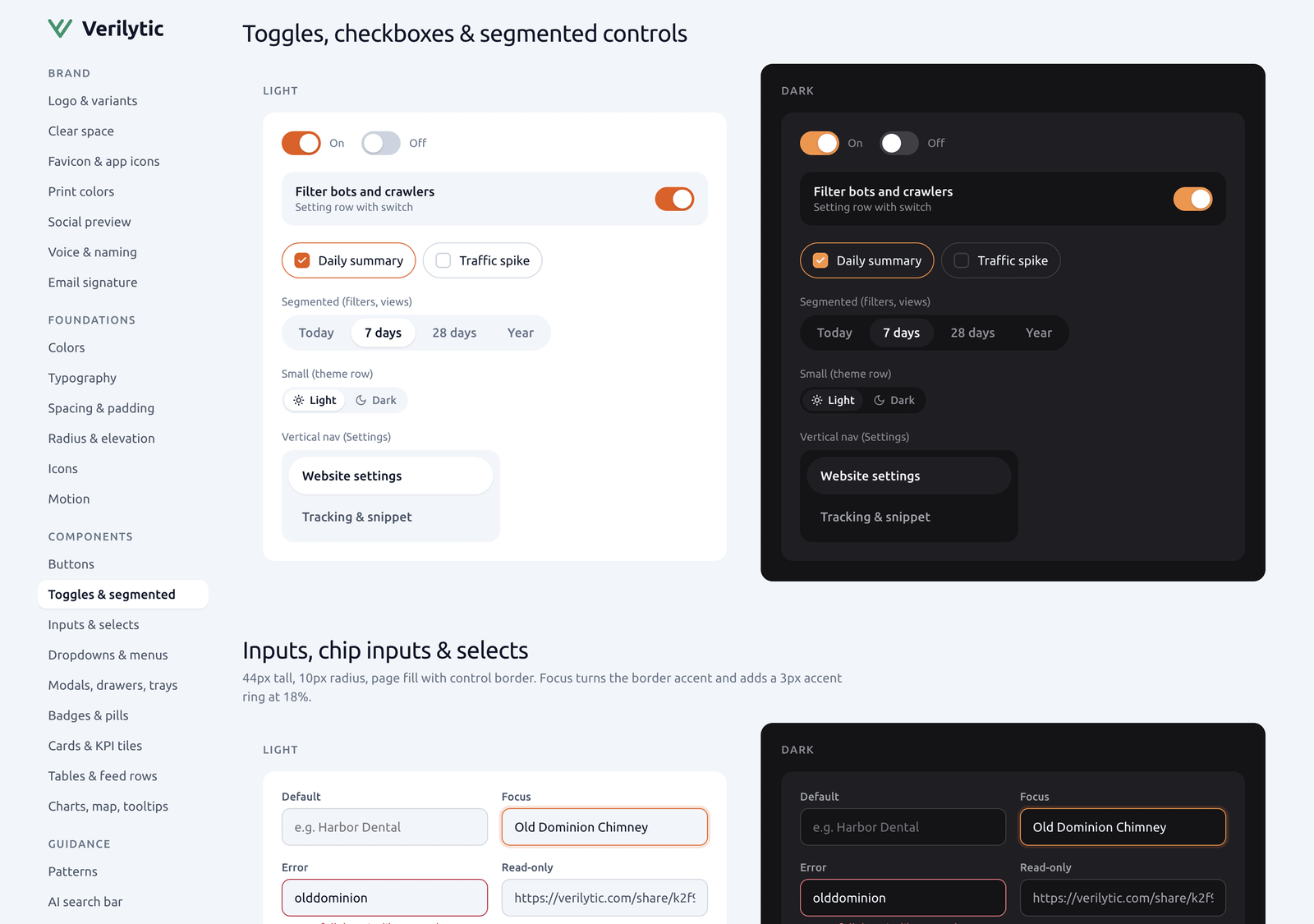
Both themes are built from one token set, so every chart, table, and status colour holds its contrast in either mode. Drag the divider to compare them.
Your analytics, pocket-sized
The responsive layout keeps live counts, the visitor feed, and the map usable on a phone, so owners can check traffic spikes away from their desk without installing an app.
From sign-up to live tracking in under two minutes
Onboarding asks only for what the product needs to start: a site, a tracking snippet, and confirmation that data is arriving. Each step shows progress, and the flow ends on the live dashboard.
A token-based system built for speed
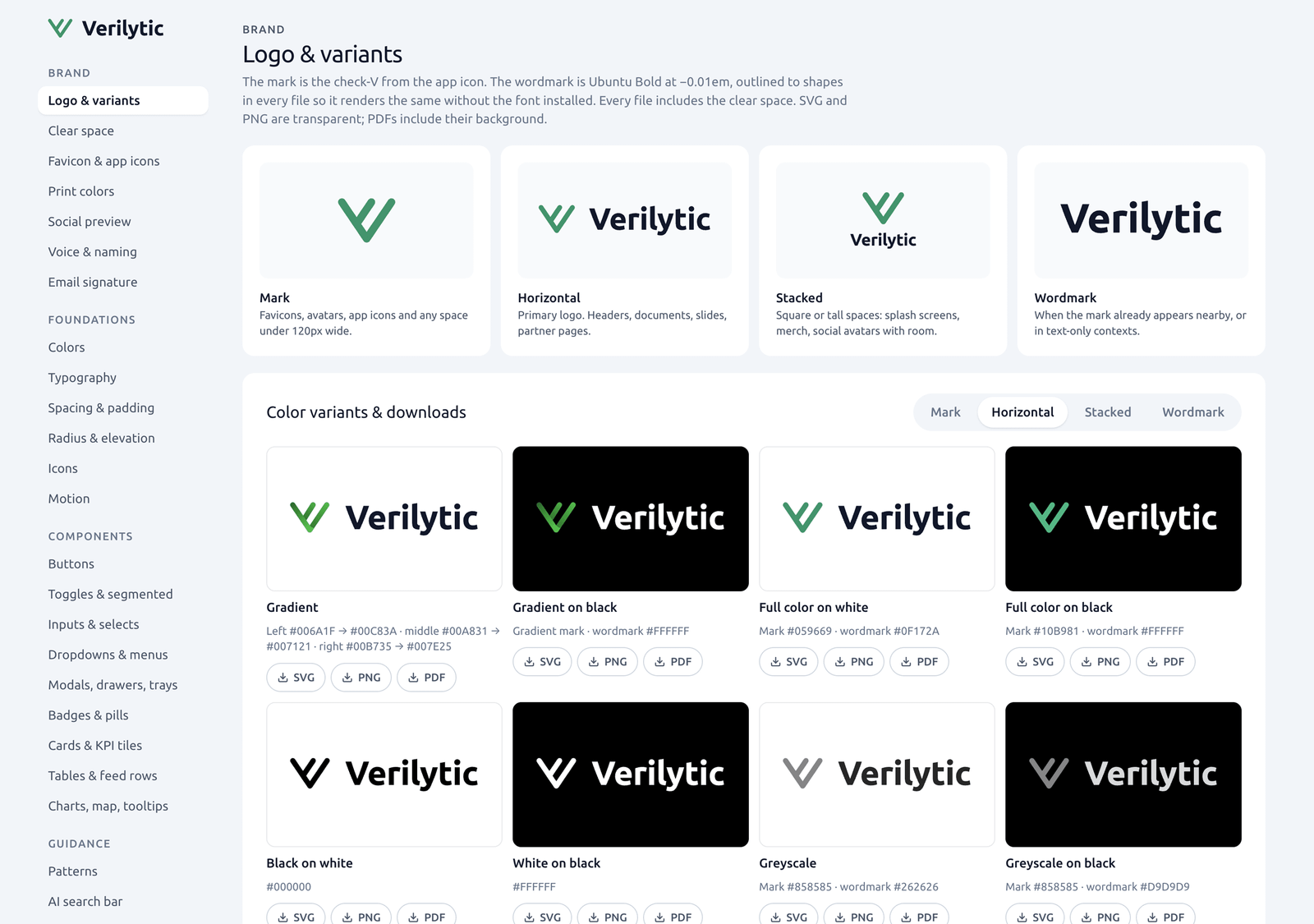
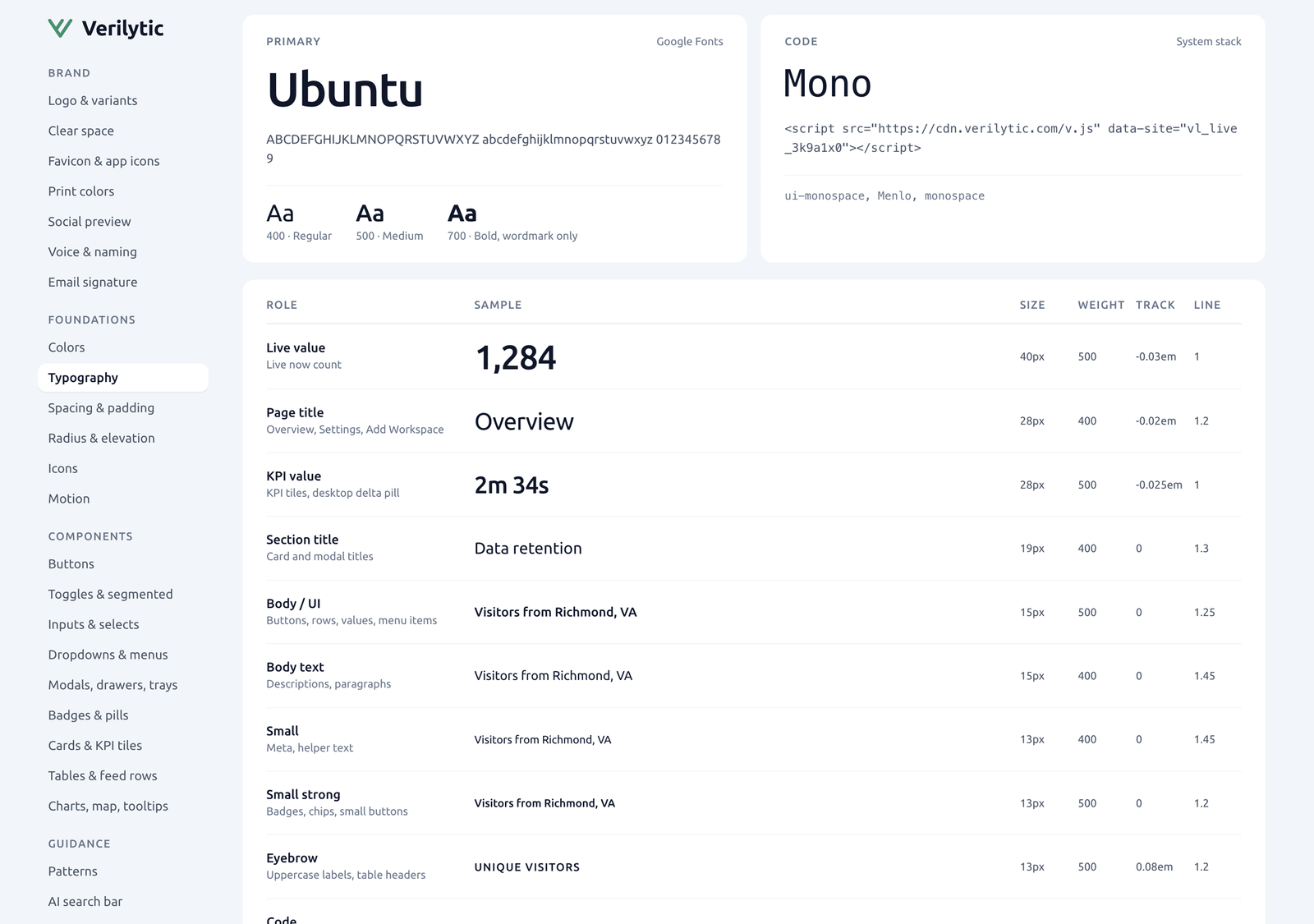
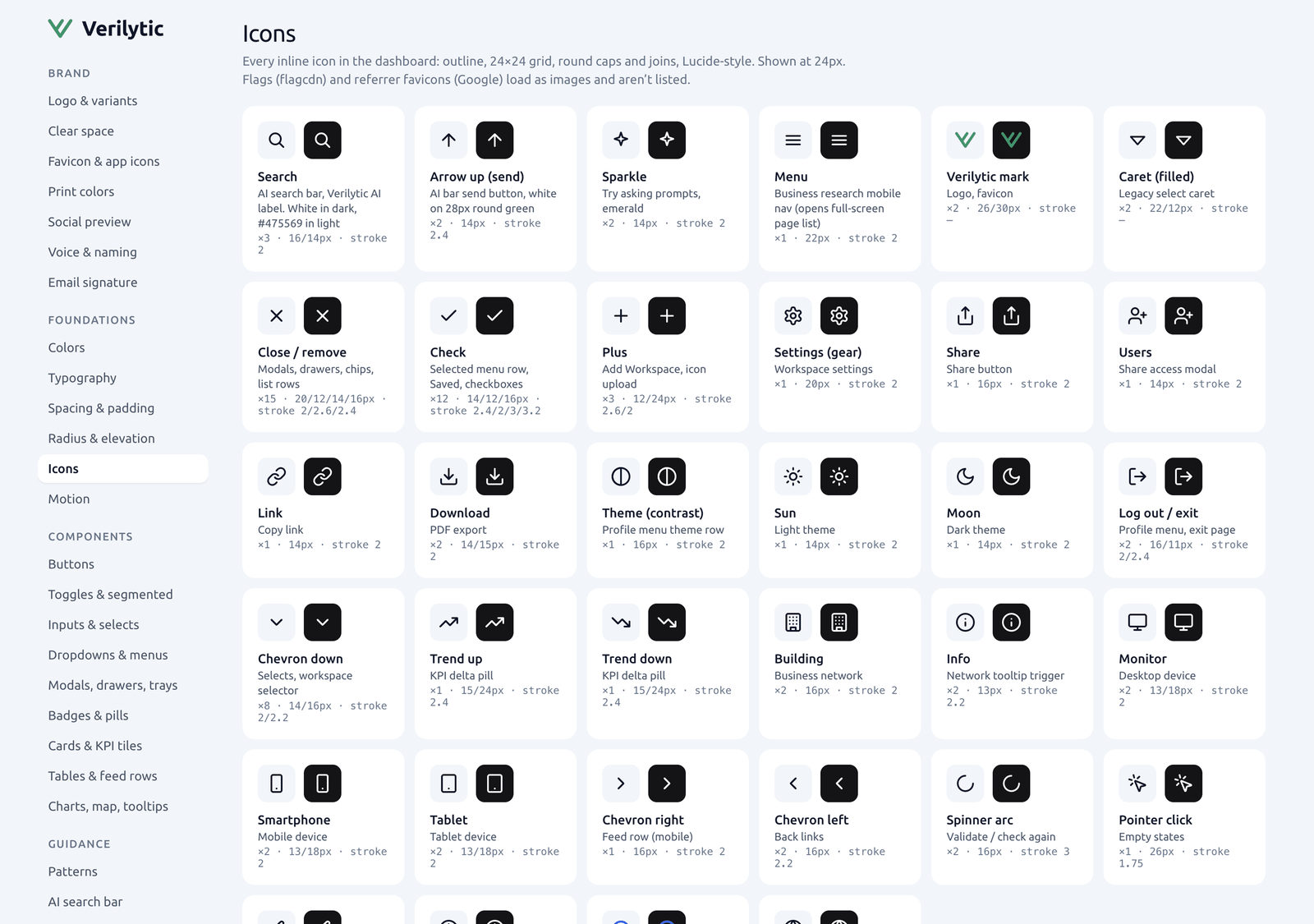
I documented colour, type, components, and interaction states in a living design guide. Generative AI accelerated the build, and the guide kept every generated screen consistent with the system.
Crafting a sharp visual anchor that signifies real-time verifiability and precision.
A web analytics engine requires an identity that feels fast, trustworthy, and modern—moving away from generic corporate charts to signal a refined, developer-grade B2B tool.




Built on truth
The name Verilytic combines verified analytics with the Latin root veri, meaning truth. It reflects the core product goal: breaking down complex, chaotic web traffic to give businesses clear, dependable visitor intent.
Geometric precision and high contrast
The visual identity is built for speed and legibility. The logomark pairs a stylized V with a sharp checkmark to signal real-time verification at a glance, while a vibrant signal green provides clear contrast without competing against dense data across the interface.
Solving a real market gap while expanding my technical AI toolkit
This project served as an ideal opportunity to improve a personal product frustration alongside evolving my skillset with AI prototyping tools.
This project proved to be a true win-win, allowing me to build a product I genuinely wanted to see available in the market while pushing the boundaries of current artificial intelligence design tooling. Taking this concept from zero to one provided a practical sandbox to test how modern design systems and advanced AI capabilities integrate into an end-to-end product workflow.